
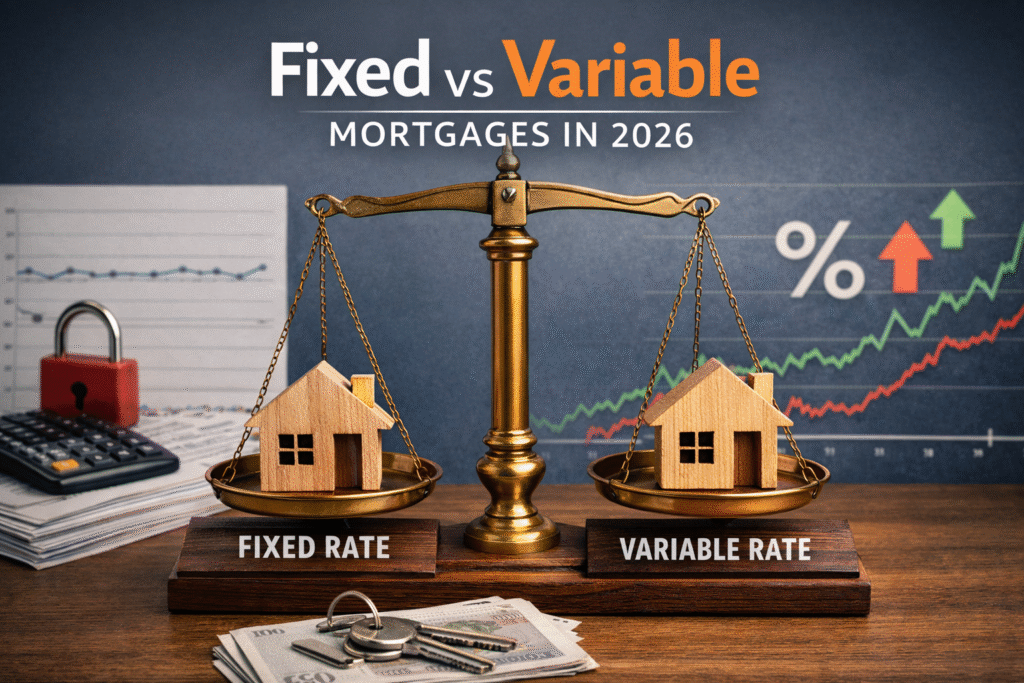
Choosing a mortgage is one of the biggest financial decisions you’ll make, and one of the first questions many buyers and homeowners ask is:
“Should I choose a fixed rate or a variable rate mortgage?”
In 2026, that decision feels especially important. After several years of rising interest rates, followed by signs of gradual improvement, many people are unsure how much certainty they need versus how much flexibility they want.
Rather than trying to label one option as “better” than the other, this guide explains how fixed and variable rate mortgages work, along with the pros and cons of each, so you can understand which type of mortgage may be more suitable for your own circumstances.
What Is a Fixed Rate Mortgage?
A fixed rate mortgage means your interest rate — and therefore your monthly mortgage payment — stays the same for a set period of time. Common fixed terms include 2 years, 3 years, 5 years, and sometimes longer.
Even if the Bank of England base rate rises or falls during that period, your rate does not change until the fixed term ends.
Pros of Fixed Rate Mortgages
1. Payment certainty
One of the biggest advantages of a fixed rate mortgage is knowing exactly what your monthly payments will be. This can make budgeting easier, particularly if household finances are tight or predictable outgoings are important to you.
2. Protection from rate rises
If interest rates increase during your fixed period, your mortgage payments will not go up. This can offer peace of mind, especially in uncertain economic conditions.
3. Popular with first-time buyers
Many first-time buyers prefer fixed rates because they offer stability at a time when other costs (moving, furnishing, bills) are also changing.
4. Easier long-term planning
If you plan to stay in your property for several years and want predictable costs, a fixed rate can help with financial planning.
Cons of Fixed Rate Mortgages
1. Early repayment charges (ERCs)
Most fixed rate mortgages come with early repayment charges if you leave the deal before the fixed period ends. This could apply if you sell, remortgage, or repay the loan early.
2. Less flexibility
If interest rates fall during your fixed period, you won’t automatically benefit from lower payments unless your deal allows switching — or you’re prepared to pay any applicable charges.
3. Often higher starting rates than some variables
Fixed rates can sometimes start higher than variable rates, as lenders price in certainty and future risk.
What Is a Variable Rate Mortgage?
A variable rate mortgage is one where the interest rate can change. This includes:
- Tracker mortgages (which usually follow the Bank of England base rate plus a set margin)
- Discount mortgages (which offer a discount off a lender’s standard variable rate)
- Standard Variable Rate (SVR) mortgages
In 2026, when people talk about variable mortgages, they are most often referring to tracker mortgages.
Pros of Variable Rate Mortgages
1. Potential to benefit from rate reductions
If interest rates fall, a tracker mortgage will usually reduce automatically, which could lower your monthly payments without needing to change products.
2. Often more flexible
Many tracker mortgages have low or no early repayment charges, making them appealing if you expect to move, remortgage, or overpay in the near future.
3. Transparent pricing (with trackers)
With a tracker, you can clearly see how your rate is calculated (for example, base rate + 0.75%), which some borrowers find reassuring.
4. Can suit short-term plans
If you know your circumstances may change — such as planning to move house or refinance — flexibility can be valuable.
Cons of Variable Rate Mortgages
1. Payments can go up
If interest rates rise, your monthly payments will increase. This uncertainty can be uncomfortable, particularly if your budget has little room to absorb higher costs.
2. Less predictable budgeting
Because payments can change, it may be harder to plan long-term household finances.
3. Not suitable for everyone
Some borrowers prefer certainty, especially those with fixed incomes or tighter affordability margins.
How the 2026 Mortgage Market Affects This Decision
In 2026, the mortgage market is expected to be more stable than the previous few years, but not completely predictable.
Interest rates are widely expected to reduce gradually, rather than sharply. That creates a situation where:
- Fixed rates offer certainty and protection
- Variable rates offer flexibility and potential movement
However, mortgage rates are influenced by more than just the base rate. Lenders also consider swap rates, funding costs, and overall market confidence — which means fixed rates don’t always move in line with base rate changes.
This is why choosing between fixed and variable isn’t about predicting the market perfectly, but about understanding how much risk and flexibility you’re comfortable with.
Who Might Consider a Fixed Rate Mortgage?
A fixed rate mortgage may be suitable if you:
- want predictable monthly payments
- are budgeting carefully or prefer certainty
- are a first-time buyer adjusting to new costs
- plan to stay in your property for the fixed term
- would struggle financially if rates increased
Who Might Consider a Variable Rate Mortgage?
A variable rate mortgage may be suitable if you:
- are comfortable with payments changing
- want flexibility with fewer early repayment charges
- expect interest rates to reduce over time
- plan to move or remortgage in the near future
- want to make larger overpayments
Fixed or Variable: It’s About Suitability, Not Guessing
One of the biggest misconceptions is that choosing a mortgage is about trying to “beat the market”. In reality, it’s about matching the mortgage to your circumstances, plans, and comfort level.
Two people buying similar properties could make very different choices — and both could be perfectly sensible.
That’s why mortgage advice is important. A good adviser doesn’t just look at rates, but also at:
- your income and job security
- future plans
- tolerance for risk
- affordability if rates change
- and how long you expect to keep the mortgage
Final Thoughts
In 2026, both fixed and variable rate mortgages continue to play an important role. Neither is universally right or wrong — they simply offer different balances of certainty and flexibility.
Understanding the pros and cons of each puts you in a much stronger position to make an informed decision, rather than one based on headlines or assumptions.
If you’re unsure which type of mortgage may be suitable for you, a conversation early on can help clarify your options and avoid surprises later.
Contact us today to discuss your options.
Important Information
This blog is for general information purposes only and should not be considered personal financial advice.
YOUR HOME MAY BE REPOSSESSED IF YOU DO NOT KEEP UP REPAYMENTS ON YOUR MORTGAGE.